
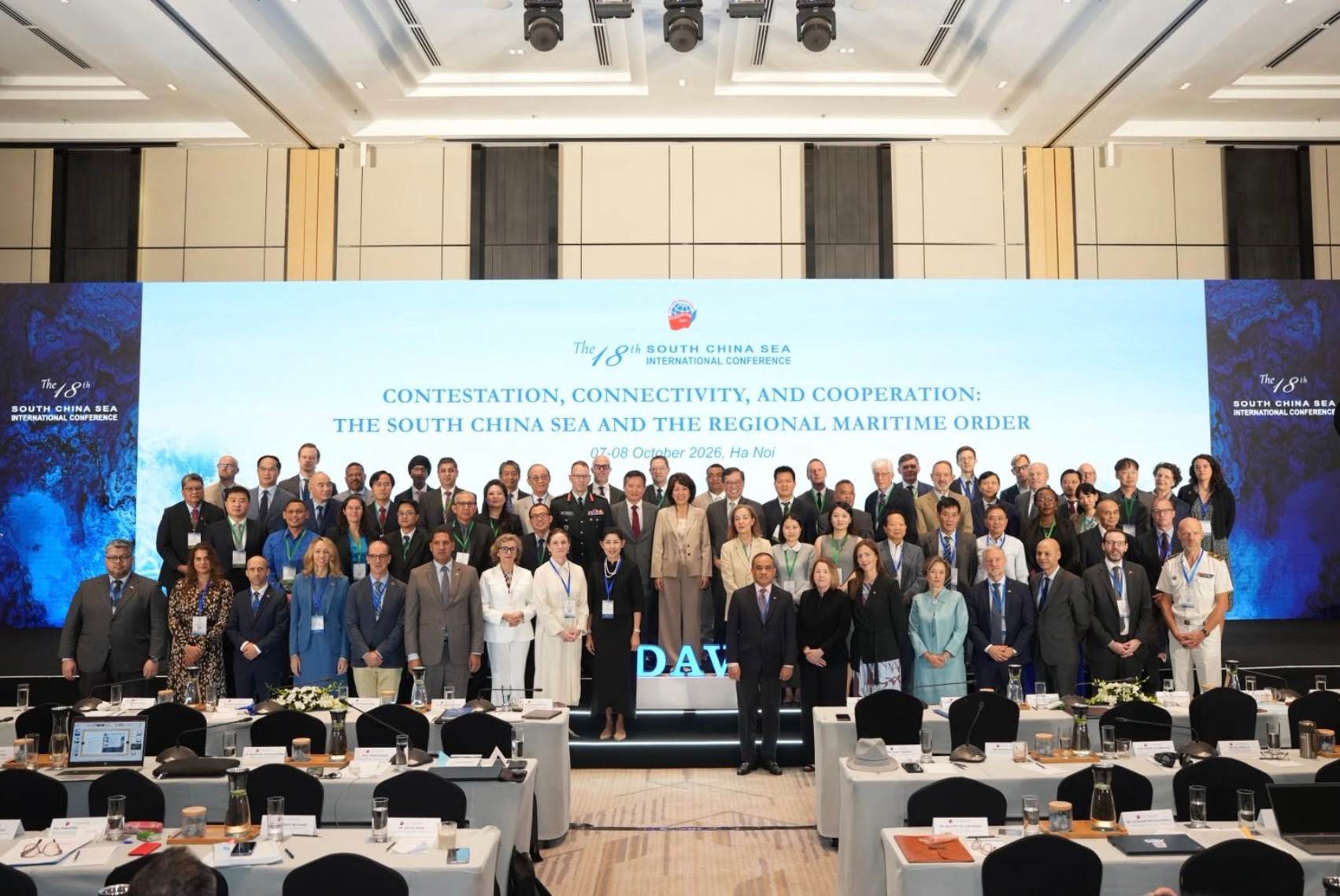
On October 7th–8th, Hu Bo, director of SCSPI and Director of Center for Maritime Strategy at Peking University, and Yu Minna, research fellow of SCSPI and associate professor at the Law School of Ocean University of China, were invited to attend the 18th South China Sea International Conference hosted by the Diplomatic Academy of Vietnam in Hanoi, Vietnam.
Titled Contestation, Connectivity, and Cooperation: The South China Sea and the Regional Maritime Order, the conference covered topics including shifts in the South China Sea’s strategic balance, maritime military competition, energy and chokepoint security, developments in the international law of the sea, regional security cooperation in Southeast Asia, and the resilience of maritime infrastructure. Around 300 participants comprising officials, academics and media representatives from more than 40 countries, regions and international organizations took part.
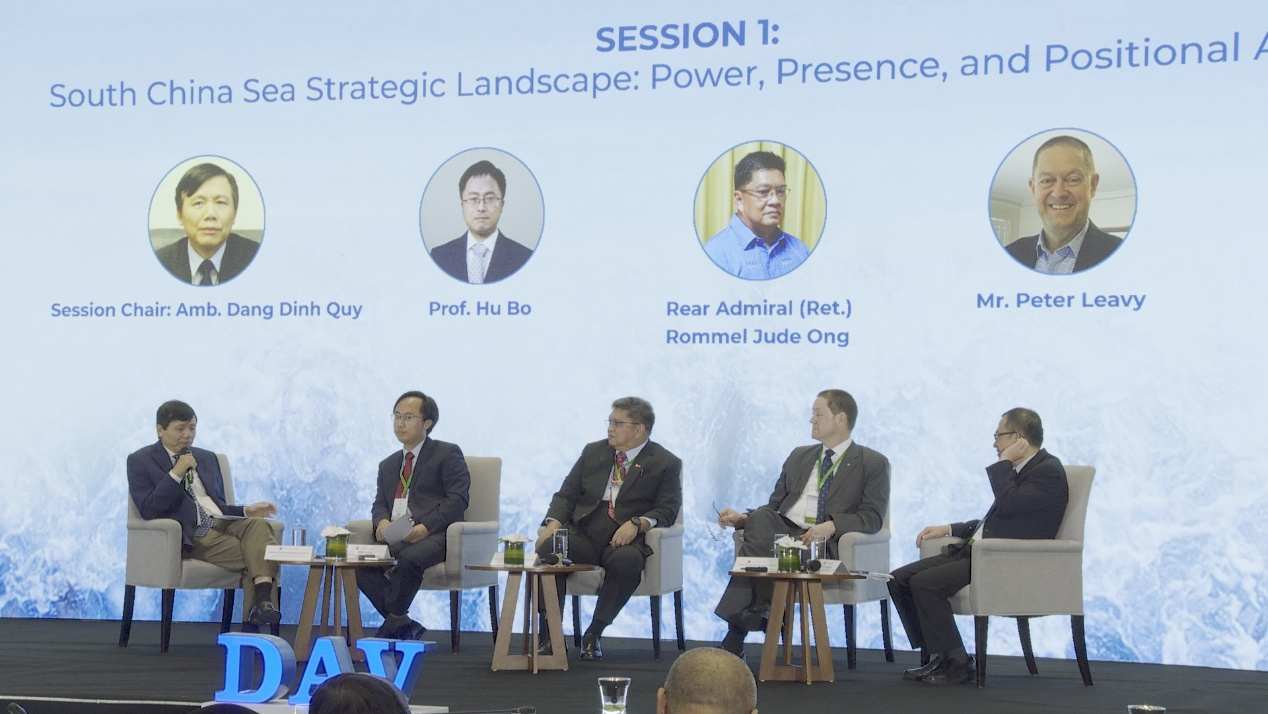
Hu Bo delivered remarks in Session 1, themed “South China Sea Strategic Landscape: Power, Presence, and Positional Advantage”. On the balance of forces and strategic landscape in the South China Sea, he noted that China and the United States are the most capable and powerful actors in the South China Sea and beyond. The US military activities and presence in the South China Sea had reached the peak. And after three decades of modernization, Chinese military has made very historical achievement. The South China Sea is undergoing a new round of strategic realignment. Both sides had advantages and disadvantages in the South China Sea. Neither side can KO or defeat the other side easily.
Vietnam, the Malaysia, Indonesia and others, their capabilities also have been improved a lot, especially the coast guards and law enforcement forces. Driven by rapid economic growth in Southeast Asia, their potential in the years ahead merits close attention. Extra regional powers, like Australia, Canada and European countries have increased their military activities. However, their military meanings are limited, with more political and diplomatic influence. The South China Sea covers a vast geographical area, and control over its checkpoints is constrained by geographical factors. Any country couldn’t control the South China Sea. China and the United States are gradually developing a relationship of “constructive strategic stability,” characterized by enhanced communication, mutual restraint, and efforts to avoid direct military conflict.

The South China Sea disputes is generally controllable. However, though maritime frictions between China and the Philippines stand out. The root cause lies in the incumbent Philippine administration’s attempt to alter the status quo in the South China Sea by relying on the award of the South China Sea Arbitration and backing from extra-regional forces. Hu Bo emphasized that China’s claims and policies on the South China Sea are stable and consistent. While China’s capacity and resolve to safeguard its sovereignty and maritime rights and interests have grown substantially, China continues to uphold the policy of shelving the disputes. China is keeping the status quo rather than changing the status quo.
During the Q&A session, responding to a question raised by a foreign scholar regarding whether China’s maritime responses to the Philippines are proportionate, Hu Bo stated: “In responding to Philippine provocations, China has exercised immense restraint. Despite possessing robust military strength and a wide array of advanced weaponry, China has only used water cannons in response to repeated maritime provocations by the Philippines. The case may be unprecedented in the history of international relations. Whether China will maintain such restraint going forward hinges largely on the Philippines. There is a well-known saying in China: ‘The greater the challenge, the greater the opportunity.’”
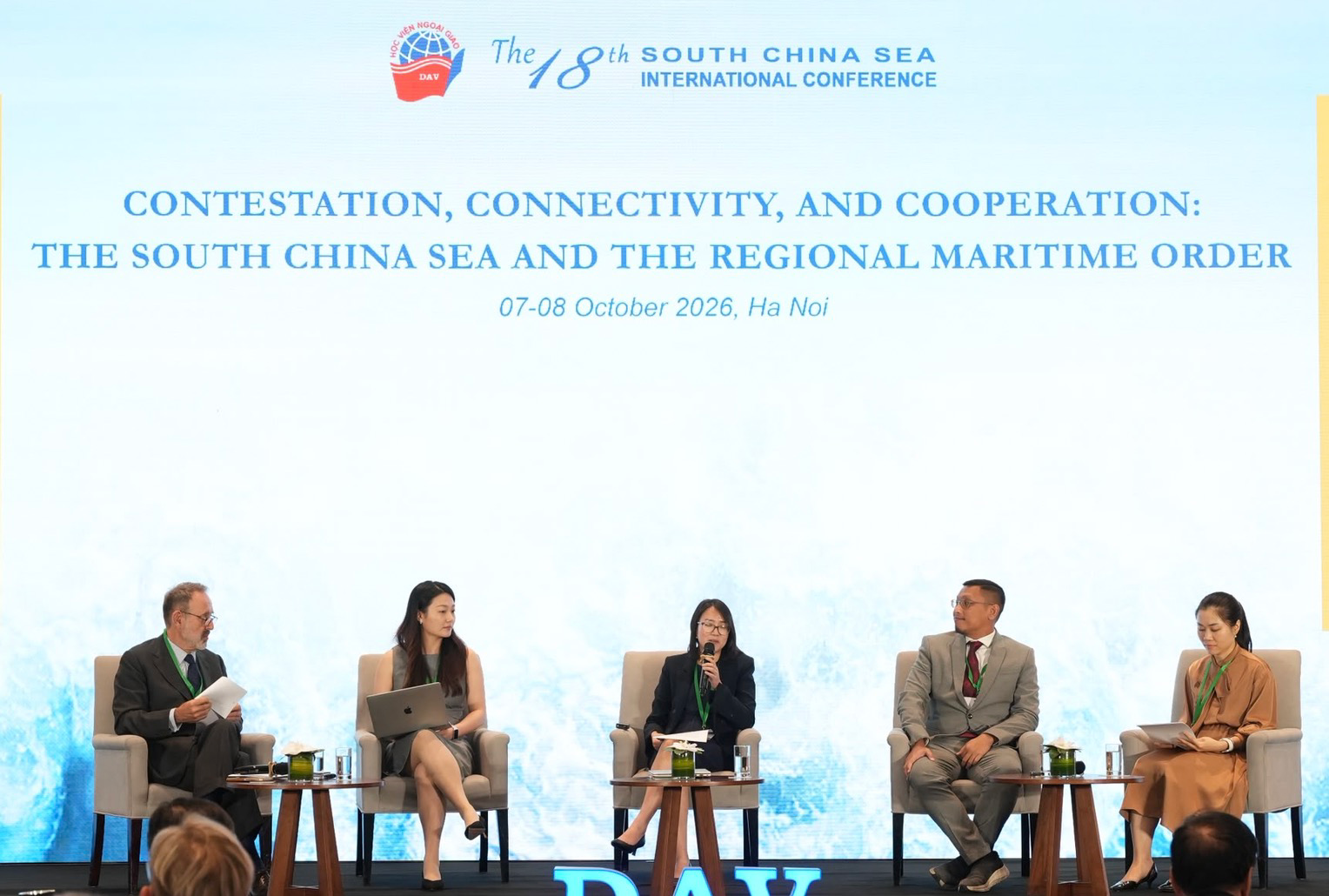
Yu Minna spoke in Session 7, themed “BBNJ, Deep-Sea Governance, and Stewardship of the Ocean Commons”. She pointed out that with the entry into force of the Agreement on Biodiversity Beyond National Jurisdiction (BBNJ), the international community’s focus has shifted from the design of the treaty to its implementation. Uncertainties remain a significant factor affecting its effective implementation.
First, regarding geographical scope, the BBNJ Agreement primarily applies to the high seas and the international seabed Area. However, a major challenge remains to be disturbing, that is the boundary between areas within and beyond national jurisdiction is not always clear and may be disputed. The draft rule introduce a method, which is “where a dispute exists, the submission is not considered.” Second, regarding temporal scope, the Agreement has a degree of retroactive application to the subsequent utilization of marine genetic resources and digital sequence information collected before its entry into force. Parties may exempt themselves from this retroactive effect by making a declaration. It creates complex legal coordination challenges for the transnational utilization of these resources and the sharing of monetary benefits.
Third, regarding subject-matter scope, the Agreement is required to not undermine other relevant IFBs, while the latter do not shoulder the same burden towards the Agreement. It is therefore necessary to coordinate its relationship with existing mechanisms, including the International Seabed Authority (ISA), the International Maritime Organization (IMO), and regional fisheries management organizations (RFMOs), to avoid institutional overlap and governance conflicts. Finally, regarding personal scope, the Agreement applies to nationals and vessels of the Parties and the activities under the Parties’ jurisdiction or control, with certain exemptions on warship and military aircraft. It potentially gives rise to overlapping jurisdictions and difficulties in determining compliance responsibilities.
Yu emphasized that all parties should further clarify the Agreement’s scope of application, strengthen coordination among existing international governance mechanisms, and establish compliance and benefit-sharing arrangements suited to the transnational nature of marine scientific research. These efforts would help facilitate the transition of the BBNJ Agreement from institutional design to effective implementation.

SCSPI

With a view to maintaining and promoting the peace, stability and prosperity of the South China Sea, we launched the South China Sea Strategic Situation Probing Initiative (SCSPI) in April of 2019. The Initiative aims to integrate intellectual resources and open source information worldwide and keep track of important actions and major policy changes of key stakeholders and other parties involved. It will provide professional data services and analysis reports to parties concerned, helping them keep competition under control, and with a view to seek partnerships.