
2026-07-02 | SCSPI
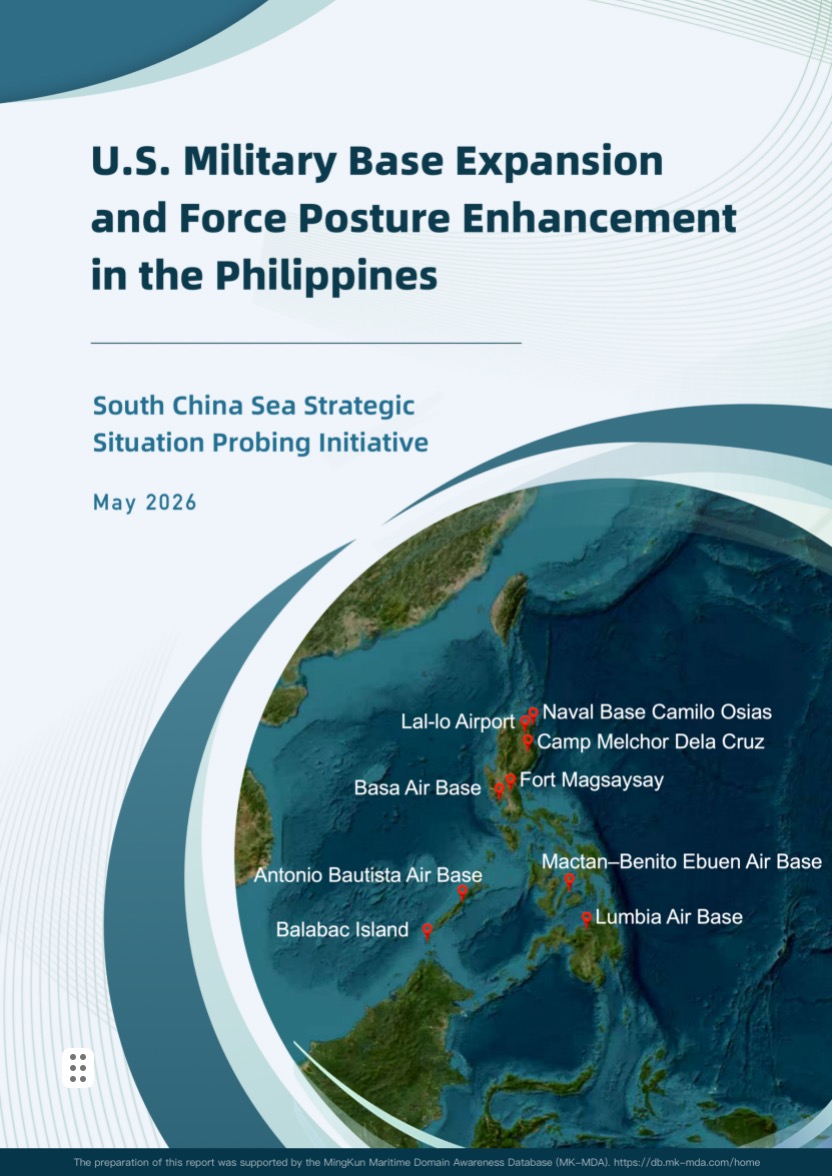
In March 1947, the U.S. and the Philippines signed the Military Bases Agreement (MBA) and the Military Assistance Agreement (MAA), granting the U.S. rent-free use of 23 Philippine bases for a period of 99 years. Concurrently, the U.S. provided military funding, weapons and equipment, training, and technical assistance to help the Philippines stabilize its political situation and build its armed forces. In August 1951, the two countries signed the Mutual Defense Treaty (MDT), which commits both parties to jointly resist potential external armed attacks, marking the formal establishment of the U.S.-Philippine alliance. In September 1966, the Ramos-Rusk Agreement reduced the lease term from 99 years to 25 years. In September 1991, the Philippine Senate rejected a new agreement that would have extended U.S. base rights, forcing the complete withdrawal of U.S. forces from Philippine bases. Subsequently, the U.S. military maintained a temporary presence and conducted joint training in the Philippines through the Visiting Forces Agreement (VFA) and the Mutual Logistics Support Agreement (MLSA).


2021-03-12 | BY SCSPI
Even though COVID-19 wreaked havoc worldwide in 2020, the US military continued to carry out intensive military activities in the South China Sea, with their strategic weapon platforms, typically carrier strike groups, strategic bombers and nuclear attack submarines, operating in the region frequently, posing unprecedented deterrence against China. In the meantime, the US Navy and Air Force continued to conduct frequent reconnaissance operations in the region, deploying a mix of reconnaissance aircraft, including those of civilian contractors, to the South China Sea, all of which built up strong momentum for battlefield construction and warfighting readiness across the US military.

2020-03-28 | BY SCSPI
In 2019, the US armed forces continued to carry out intensive military activities in the South China Sea, with their strategic platforms coming in and out of the region frequently, sea and air reconnaissance forces conducting various operations vigorously, the freedom of navigation operations (FONOPs) near China’s stationed islands and reefs in the South China Sea increasing rapidly, and military diplomacy intensifying unprecedentedly. Though the US has become slightly more prudent in its words and deeds with regard to the military conflicts with China in the South China Sea, its operations in this region, in terms of both scale and intensity, have been significantly reinforced, compared to those in 2018. With the continual military exercises and various drills of the US armed forces and the rushing deployment of forces and platforms in the South China Sea, the region has become a front line of the maritime strategic competition between China and the US.

2019-12-27 | BY SCSPI
In 2019, the US military substantially strengthened the contents and intensity of military exercises in the South China Sea and its neighboring areas, and pressed ahead with over 100 reinforced joint military exercises and drills with countries surrounding the South China Sea and extra-regional powers.

2019-06-16 | BY Chen Yong
Following the end of the war on terrorism, the US has shifted the focus of its national security strategy back to great-power competition and now...

2019-06-01 | BY SCSPI
CONTENT
I. Intensive FONOPS
II. Increasing Deployment of Strategic Weapons
III. More Targeted Military Exercises and Cooperations
IV. Intensive...