
Against the backdrop of the lack of substantive progress in the U.S.-Iran talks held in Islamabad [1] over the weekend of April 11-12, the U.S. military has been imposing a formal maritime blockade on traffic entering and leaving Iranian ports as well as the Iranian coast since April 13. [2] Evidently, maritime traffic in the Strait of Hormuz region is once again severely disrupted. On April 21, U.S. President Donald Trump emphasized that the U.S. “will not lift its blockade on Iranian ports until a deal has been reached with Tehran”. [3] It seems, therefore, such a chaotic scenario will last for some time, depending on future diplomatic developments.
Leaving aside the economic impact brought by the blockade, an objective assessment leads to the conclusion that the planned U.S. blockade is not only legally flawed but also questionable in terms of feasibility and unlikely to achieve its strategic objectives. It should be regarded as a misguided decision destined to fail.
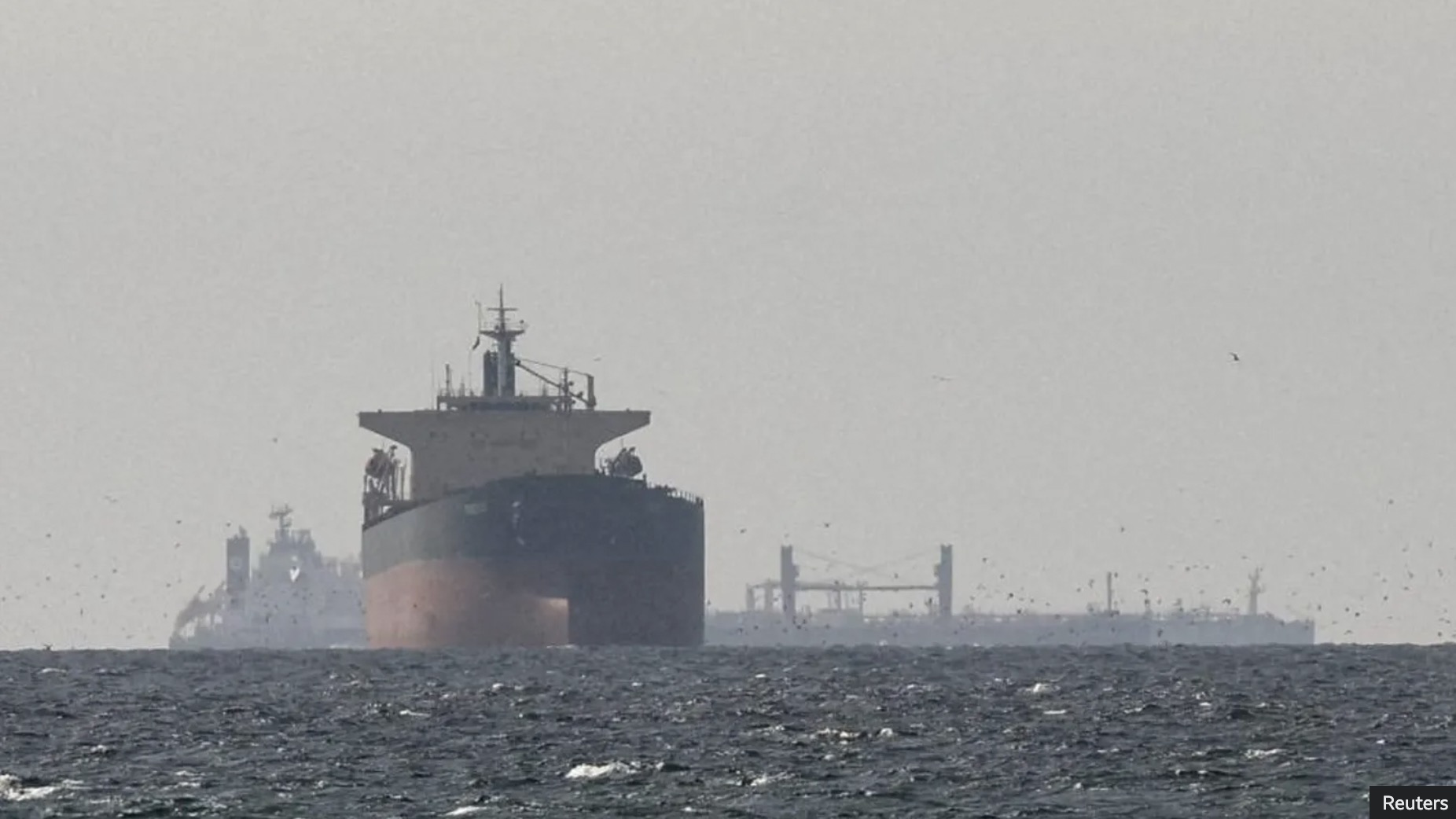
Questionable Legality of the U.S. “Blockade”
From the perspective of international law, the blockade announced by the United States is difficult to justify. According to compilations of rules and customary international law governing international armed conflicts at sea, such as the 1994 San Remo Manual on International Law Applicable to Armed Conflicts at Sea, [4] the Newport Manual on the Law of Naval Warfare, [5] and the U.S. Commander’s Handbook on the Law of Naval Operations, [6] straits used for international navigation like the Strait of Hormuz must continue to guarantee the right of transit passage for vessels and aircraft of states not party to the conflict (i.e., neutral states), even during international armed conflicts. Moreover, blockades must not prevent access to neutral ports or interfere with the normal trade of neutral states. In this sense, U.S. President Trump’s previous claim of a “comprehensive blockade” of the Strait of Hormuz clearly violates international law. Although Gulf states such as Oman, Bahrain, Qatar, and the United Arab Emirates have been affected by recent hostilities, they are not, strictly speaking, belligerents in a state of war with Iran. Legally, they should still be regarded as neutral states in the U.S.-Iran conflict. Accordingly, vessels and aircraft of these states, as well as those of other states such as China and India, should retain the right of transit passage through the Strait of Hormuz. This stance is echoed by the Secretary-General of the International Maritime Organization, Arsenio Dominguez. [7]
Although the blockade as implemented appears, in technical terms, to conform to the rules governing blockades in international armed conflict at sea, it must be noted that the U.S. and Israeli attacks against Iran since February 28 constitute unilateral military actions undertaken without authorization from the United Nations Security Council and are, in essence, acts of aggression in violation of the UN Charter. The blockade of Iranian ports is therefore part of a broader use of force that contravenes the fundamental principle of the prohibition on the use of force under general international law. Regardless of its formal compliance with certain blockade requirements, its substance remains unlawful. Indeed, the specific military operation of blockade, and related U.S. measures and rhetoric have not garnered support even among Western allies. Trump’s earlier call for allies to participate in a naval “escort coalition” in the Strait of Hormuz went unanswered. [8] In fact, on the morning of April 13, Australian Prime Minister Anthony Albanese stated that “the Strait of Hormuz should remain open”. [9] Later that day, UK Prime Minister Keir Starmer explicitly declared that the United Kingdom does not support a blockade of Iranian ports. [10] Even Pope Leo XIV, who rarely comments on international affairs, expressed concern. [11] It is evident that both the legal foundation and political support for such a blockade are weak within the international community.
Doubts About the U.S. Military’s Ability to Enforce an “Effective Blockade”
Beyond legal controversies, a more pressing question is whether the U.S. Navy possesses the practical capability to enforce an “effective blockade.” From both military and geographical perspectives, multiple constraints are evident.
First, the Strait of Hormuz and surrounding waters (Gulf of Oman, for instance) are geographically complex, with dense shipping traffic. In peacetime, large numbers of oil tankers and commercial vessels transit the maritime area daily, accounting for roughly one-fifth of global energy transportation. Under the current U.S. blockade, accurately identifying and intercepting all vessels entering or leaving Iranian ports would impose extremely high demands on intelligence, surveillance, and identification capabilities. Any misjudgment or misidentification could trigger incidents or disputes with states not involved in the conflict. Although the U.S. Central Command asserted on April 14 that “no vessels have breached the blockade since its implementation”, [12] such an assertion has been challenged by various third-party reports. According to Lloyd’s List, by April 20, at least 26 vessels had bypassed the U.S. blockade. [13]
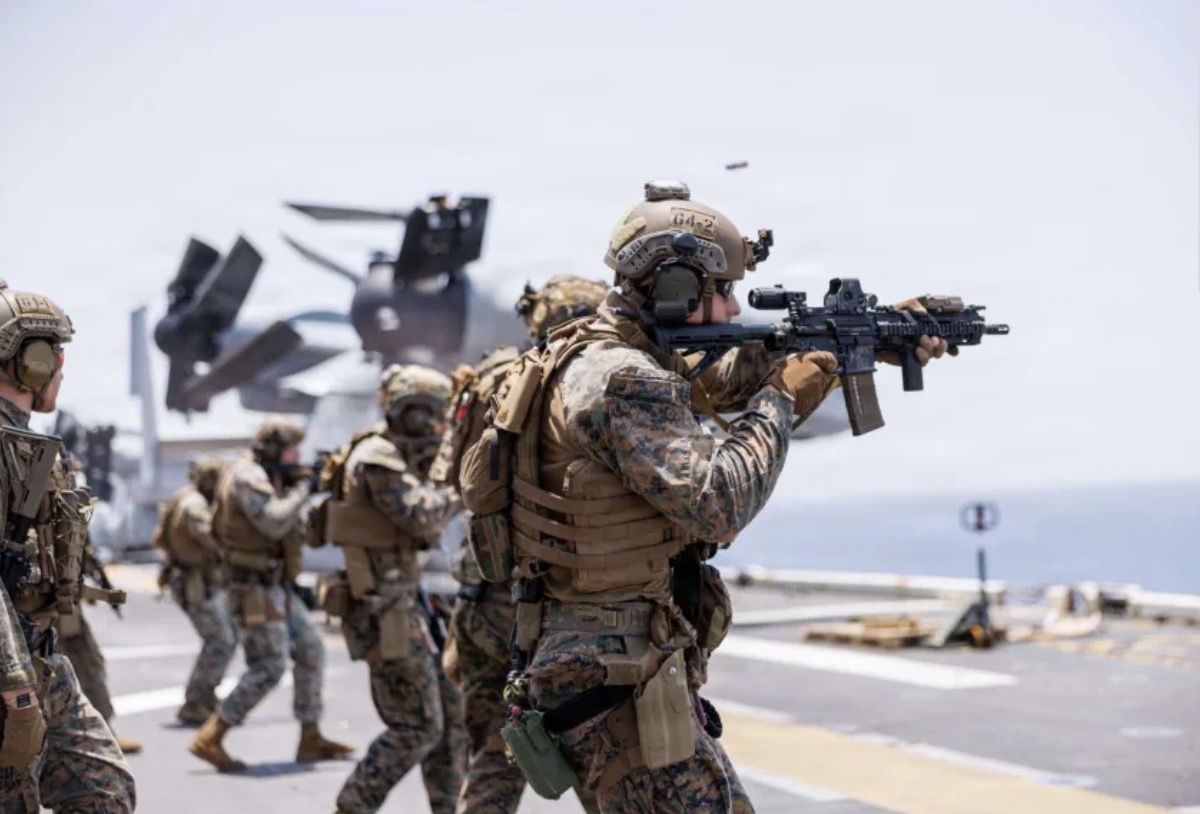
Second, under the law of naval warfare, a blockade must be effective. Achieving such effectiveness typically requires sustained, stable, and large-scale deployment of naval and air forces. Although the United States possesses the world’s most powerful navy, maintaining surveillance and interdiction across all Iranian ports and adjacent sea lanes would consume substantial maritime, air, and logistical resources. The earlier U.S. appeal for other countries to join an “escort coalition” already revealed limitations in its ability to manage Iran’s potential control over the Strait of Hormuz. Implementing a more demanding blockade would be even more challenging.
Third, and most critically, Iran’s capacity for military countermeasures constitutes a significant constraint. Iran has long developed asymmetric warfare capabilities in the Strait of Hormuz, including the deployment of a vast number of naval mines, fast-attack craft swarms, and shore-based missile systems. One stated objective of the U.S. blockade is to “clear” mines allegedly laid by Iran, which itself underscores the highly complex security environment in the area. Should Iran exploit its geographic advantages to undertake counteractions, the U.S. blockade could be severely hindered or even fail entirely.
In addition, Iran has explicitly warned that it will respond forcefully to U.S. military forces approaching the strait. [14] This suggests that the blockade would not remain a low-intensity operation but could instead escalate the conflict, erasing any diplomatic momentum generated by recent talks.
Limited Coercive Effect and Unlikely to Force Substantive Concessions
At the strategic level, it is also uncertain whether a blockade could compel Iran to make concessions. A key reason is that Iran has developed a degree of resilience under long-term U.S. sanctions. Although its energy exports, trade networks, and financial channels have been constrained, they have not been completely severed. Even if maritime transport is disrupted, Iran may find alternative means to partially offset the impact. Evidently, since the outbreak of the Russia-Ukraine conflict in February 2022, Russia has endured extensive Western sanctions while maintaining basic economic operations. [15] By analogy, Iran is unlikely to collapse under a maritime blockade alone. Such measures are insufficient to deliver a decisive “economic blow”.
Moreover, external pressure tends to reinforce hardline positions within Iran. Iranian leadership has already stated that U.S. threats “will have no effect.” Amid rising nationalism and security pressures, Iran is more likely to adopt a confrontational stance rather than rapidly compromise. Historical experience shows that unilateral military pressure rarely produces swift changes in Iran’s core policies. Indeed, despite the deaths of several Iranian leaders in the current round of conflict, Iranian morale has not diminished.
Furthermore, as noted earlier, the U.S. and Israeli military actions themselves are widely regarded as violations of the UN Charter and lack international support, including among Western allies. This further weakens the effectiveness of U.S. pressure on Iran. If the blockade is perceived as undermining international maritime order, it will not only fail to isolate Iran but may also heighten concerns among allies and the broader international community, resulting in diminishing support.
More importantly, the strategic significance of the Strait of Hormuz means that any disruption will reverberate across global energy markets. Escalation would likely trigger oil price volatility and supply instability, affecting the interests of many pro-U.S. states. Under such circumstances, U.S. allies and the international community are more likely to favor renewed negotiations and de-escalation rather than prolonged confrontation. This external environment further constrains the scope for U.S. coercive pressure through a blockade.
Verdict
In a word, the current U.S. blockade initiative suffers from legal deficiencies, faces significant practical obstacles, and is unlikely to achieve its intended strategic effects. As an unwelcomed unilateral action, it risks undermining the international maritime order and further eroding the rules-based system centered on the UN Charter, while offering no tangible benefits to the United States beyond exacerbating tensions. Indeed, on April 22, President Trump claimed that he would “extend Iran ceasefire indefinitely” as the status of a second-round peace negotiation remains unclear. [16] This very fact seems to prove that the strategic goal of the blockade failed miserably.
Given the heightened volatility in the Strait of Hormuz, any measures that intensify confrontation should be approached with extreme caution. Safeguarding freedom and security of navigation in the strait and promoting dialogue and negotiation remain the most viable options in the interest of both regional and global stability.
References
[1] “U.S. And Iran Fail to Agree on Peace Deal After 21 Hours of Talks, Vance Says”, New York Times, April 11, 2026, https://www.nytimes.com/live/2026/04/11/world/iran-war-trump-talks-pakistan.
[2] “U.S. to Blockade Ships Entering or Exiting Iranian Ports”, U.S. Central Command, April 12, 2026, https://www.centcom.mil/MEDIA/PRESS-RELEASES/Press-Release-View/Article/....
[3] “Trump says US will not lift Hormuz blockade until deal made with Iran”, BBC News, April 21, https://www.bbc.com/news/articles/cdxd88r2wjzo.
[4] International Committee of the Red Cross, San Remo Manual on International Law Applicable to Armed Conflicts at Sea, 12 June 1994, https://ihl-databases.icrc.org/en/ihl-treaties/san-remo-manual-1994.
[5] U.S. Naval War College, Newport Manual on the Law of Naval Warfare, second edition, https://digital-commons.usnwc.edu/ils/vol105/iss1/1.
[6] U.S. Commander’s Handbook on the Law of Naval Operations, edition March 2022, https://stjececmsdusgva001.blob.core.usgovcloudapi.net/public/documents/....
[7] “IMO chief says countries have no right to blockade int'l straits”, Xinhua Net, April 13, 2026, https://english.news.cn/20260413/df845eb98c144da89fe1989e3bb16d8d/c.html.
[8] “Trump urges UK and other nations to send warships to Strait of Hormuz”, BBC News, March 15, 2026, https://www.bbc.com/news/articles/cd039n9vj3vo.
[9] “Defence chief says Australian ships ‘ready, capable’ as Albanese calls on US and Iran to reopen strait of Hormuz”, The Guardian, April 13, 2026, https://www.theguardian.com/world/2026/apr/13/australia-pm-albanese-us-i....
[10] “Starmer says UK will not join Trump's blockade of Iran's ports”, BBC News, April 13, 2026, https://www.bbc.com/news/articles/c393wxzw4yjo.
[11] “Pope says he has ‘no fear of Trump administration’ after president slams his Iran war criticism”, CNN News, April 14, 2026, https://edition.cnn.com/2026/04/12/politics/trump-pope-leo-criticism-hnk....
[12] “Why are some ships going through the Strait of Hormuz during a blockade?”, CNN News, April 15, 2026, https://edition.cnn.com/2026/04/15/middleeast/iran-blockade-explainer-an....
[13] “At least 26 Iranian shadow fleet vessels bypass US blockade”, Lloyd’s List, April 20, https://www.lloydslist.com/LL1156966/At-least-26-Iranian-shadow-fleet-ve....
[14] “US begins blockade of Iran’s ports, Tehran threatens retaliation”, Reuters, April 13, 2026, https://www.reuters.com/world/middle-east/us-blockade-iran-after-talks-f....
[15] “The Russian economy is finally stagnating. What does it mean for the war – and for Putin?”, The Guardian, February 6, 2026, https://www.theguardian.com/world/ng-interactive/2026/feb/06/the-russian....
[16] “Trump declares Iran ceasefire extension with peace talks in doubt”, Reuters, April 22, 2026, https://www.reuters.com/world/asia-pacific/us-will-indefinitely-extend-c....
Bao Yinan

Dr Yinan BAO is currently an Associate Research Fellow at Huayang Center for Maritime Cooperation and Ocean Governance. He specializes in public international law, with a focus on diplomatic law and the law of the sea. He has published over twenty academic papers on public international law, covering topics such as diplomatic law and the law of the sea. He has also authored Chinese and English commentary articles for platforms including Global Times, The Paper, Guancha.cn, The Diplomat, Voice of the South China Sea, etc.